Diastasis recti pictures: how to recognize it at rest and under strain
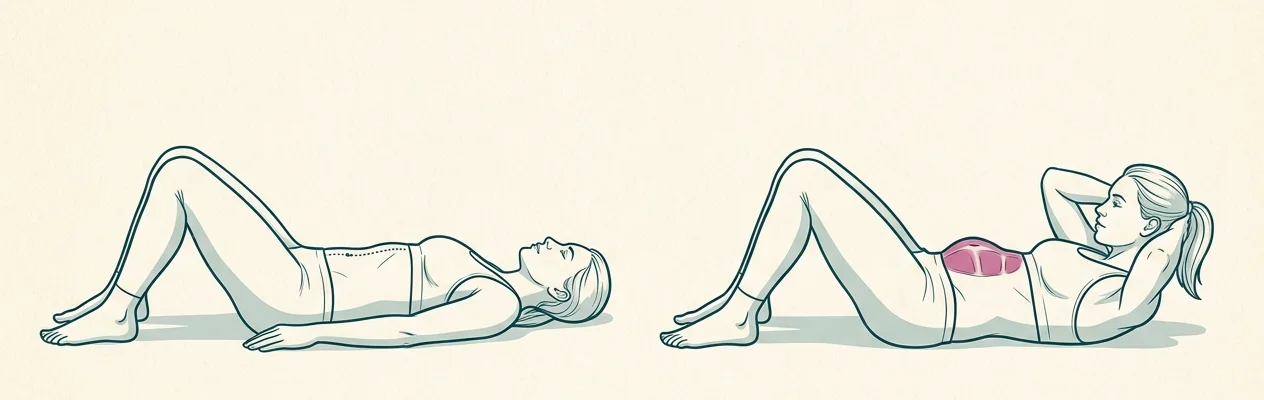
Diastasis recti is often hard to see at rest: the abdomen may only look rounded, sometimes with a protruding navel. The recognizable sign appears under strain, when lifting the head, coughing or straining, as a ridge along the midline between the two rectus muscles. The illustrations and photographs on this page show what to look for in women and in men; the width of the gap is measured only by examination and ultrasound.
These pictures are a guide to recognizing the signs, not a way to diagnose. Illustrations are labeled as such; photographs show real abdomens and say what is visible in each.
How does diastasis recti look at rest?
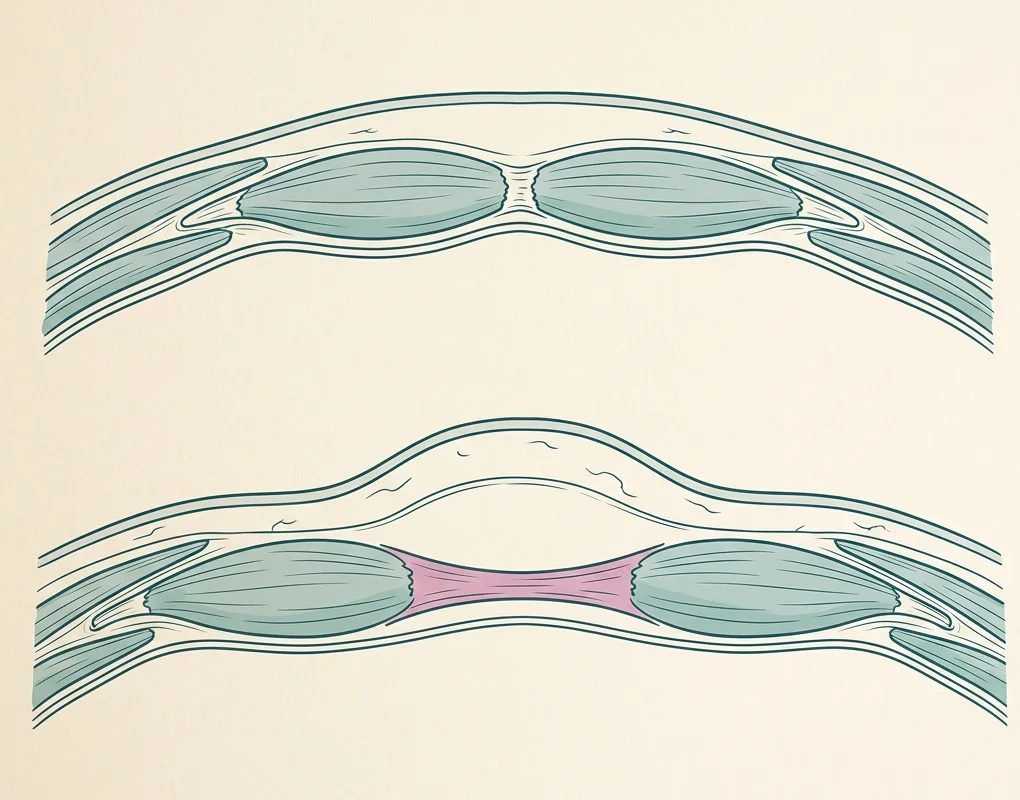
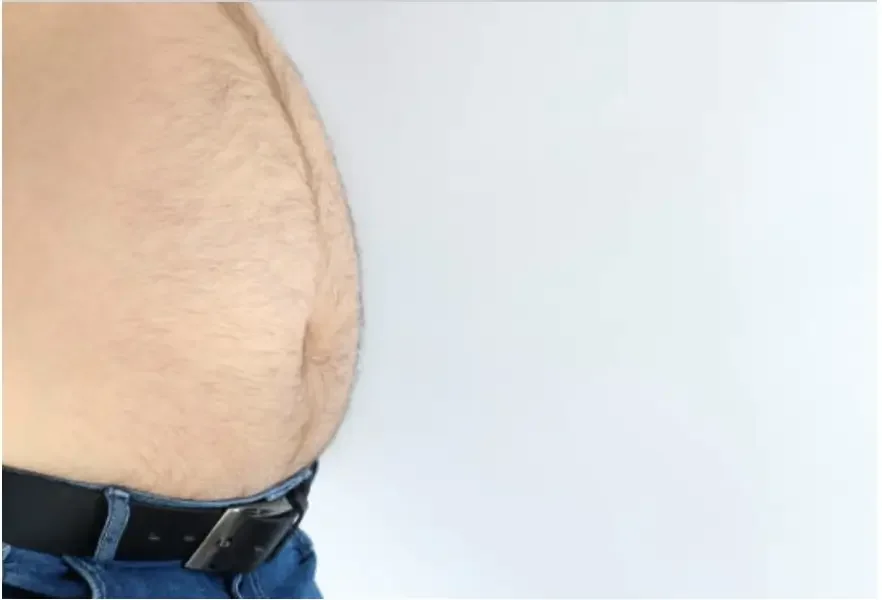
At rest a diastasis is often hard to see. The abdomen may look only slightly rounded, and the navel can appear stretched or protruding; the separation of the muscles becomes visible only when the wall is put under strain.

What appears under strain?
When you lift your head from lying down, cough or strain, pressure inside the abdomen pushes the widened linea alba forward. A ridge appears along the midline, sometimes called doming or coning: it is the most recognizable sign of diastasis, and it is what the self-check at home looks for.

How does it present in women after pregnancy?
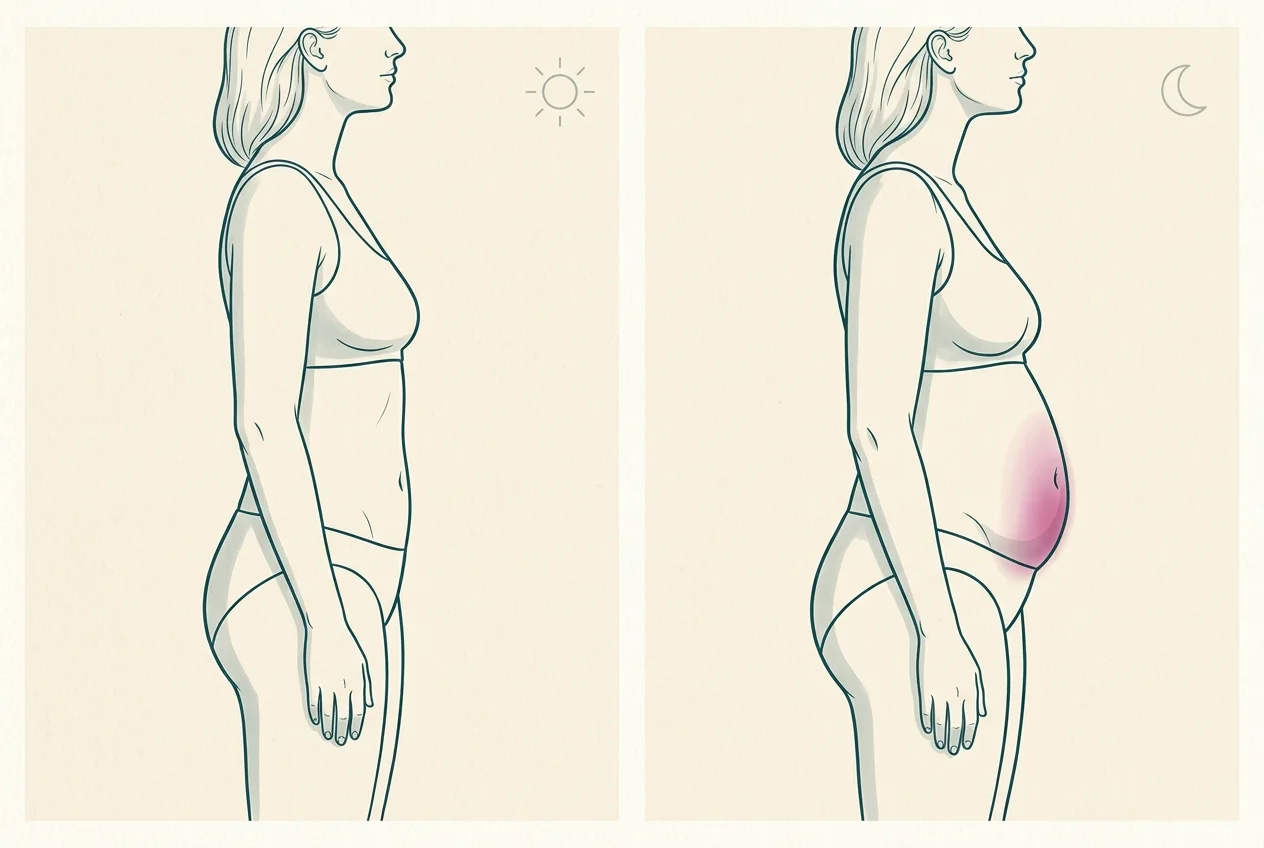
After birth the skin around the navel can stay loose and the lower belly can protrude. The shape resembles bloating, but it depends on a wall that does not contain the abdomen as before. Loose skin and diastasis often coexist, and they are assessed separately; more on the months after birth in diastasis recti in pregnancy and postpartum.

Why is the belly flat in the morning and rounder in the evening?
During the day, standing, meals and fatigue load a wall that does not contain well, and the lower belly protrudes more. It is a common observation, not a measurement, and it is explained in bloating, constipation and the abdomen that changes through the day.
How is it recognized in men?
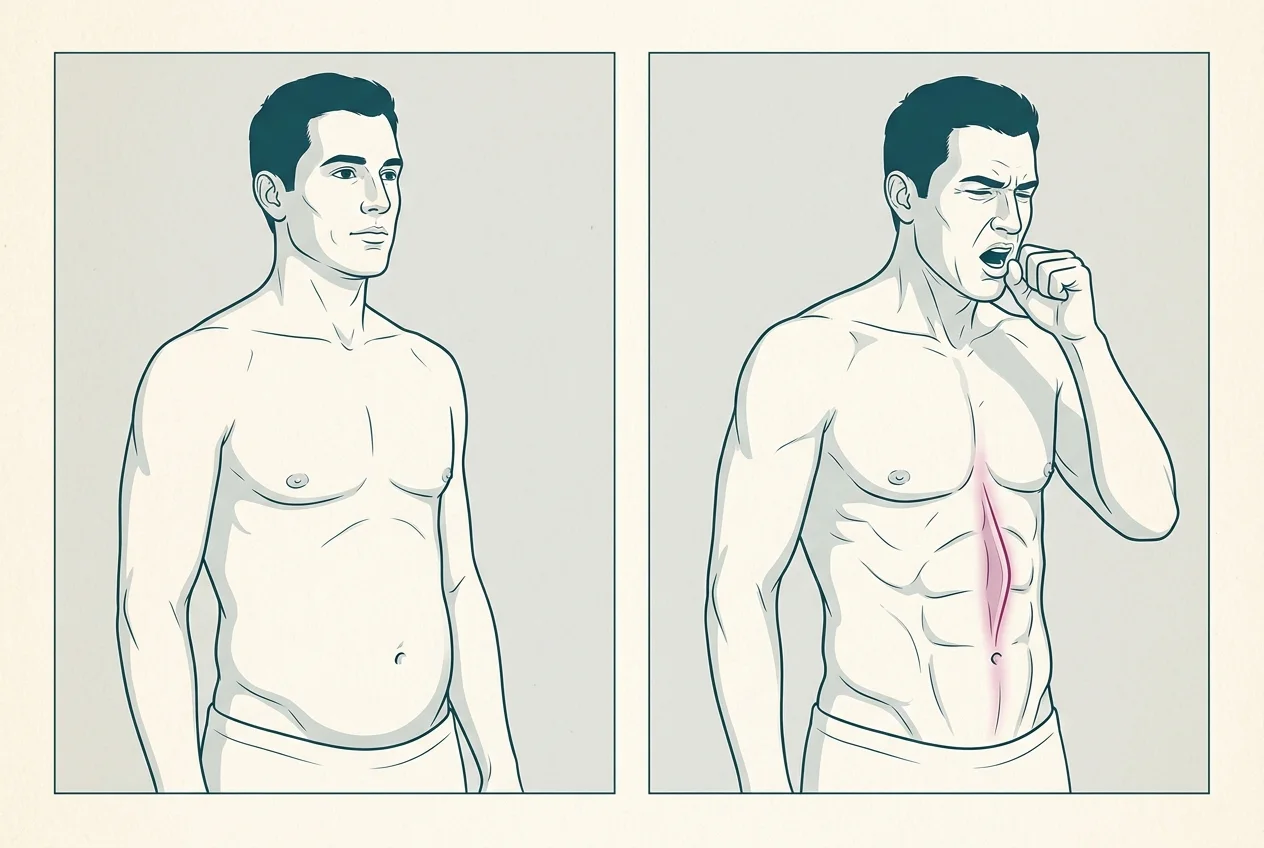
In men, diastasis is often mistaken for a belly due to weight: at rest the abdomen looks rounded and the skin is taut rather than loose. The sign appears under strain, as a fin-shaped ridge from the breastbone to the navel when coughing or sitting up. See diastasis recti in men and the article on rectus diastasis in men.
What do these pictures not tell you?
A picture does not show how wide the gap is, whether there is a hernia, whether treatment is needed or what result to expect. The width is measured by examination and dynamic ultrasound; the thresholds are explained in how rectus diastasis is measured and when it becomes significant. Before-and-after images are discussed on diastasis recti surgery: before and after, explained.
Who may use these pictures?
The illustrations and photographs on this page are © Dr. Federico Fiori and may not be republished without permission; photographs of patients are published only with specific written consent. The full terms are in who may use these images.
Can you see diastasis recti in a photo?
Often not at rest. The typical sign, a ridge along the midline, appears under strain: when lifting the head, coughing or straining.
What does doming look like?
A lengthwise ridge or tent along the midline between the two rectus muscles, which appears when pressure inside the abdomen rises.
Is a protruding navel a sign of diastasis?
It can go with it, because a stretched midline pulls on the navel, but a protruding navel can also be an umbilical hernia; an examination tells the two apart.
How does diastasis look in men?
Like a rounded, taut belly at rest, with a fin-shaped ridge from the breastbone to the navel when coughing or sitting up.
Can pictures tell how wide my diastasis is?
No. The width is measured with an examination and dynamic ultrasound.