Surgical meshes for the abdominal wall, explained
A surgical mesh is a reinforcing implant used in diastasis and hernia repair to strengthen the abdominal wall and lower the risk of recurrence. It is usually placed in the retromuscular (sublay / Rives-Stoppa) plane, and comes in permanent, absorbable, biosynthetic and composite types chosen to fit the individual repair.
A mesh (prosthesis) is an implant used to increase the strength of an abdominal-wall repair and reduce the risk of recurrence. It is one of the most common questions before diastasis surgery. Modern meshes act as a scaffold for the patient’s own tissue to grow into, not just as a mechanical patch — and choosing whether, which and where to place one is an individual decision.
When is a mesh used?
The European Hernia Society suggests mesh reinforcement for a diastasis associated with an umbilical hernia of roughly 1 cm or larger; for smaller defects, or when no hernia is present, plication alone may be enough. Every patient needs clinical, imaging and sometimes intraoperative assessment: the quality and trophism of the wall guide the decision, which should be individualized rather than automatic.
Where is the mesh placed? (onlay vs sublay)
Mesh can sit in several planes: intraperitoneal, preperitoneal, retromuscular, or prefascial (onlay, in front of the anterior sheath). When a mesh is indicated and the anatomy allows, the retromuscular (Rives–Stoppa) plane is generally preferred: enclosed by muscle in front and fascia/peritoneum behind, it is considered the safest position for surgical-site infection and occurrence.
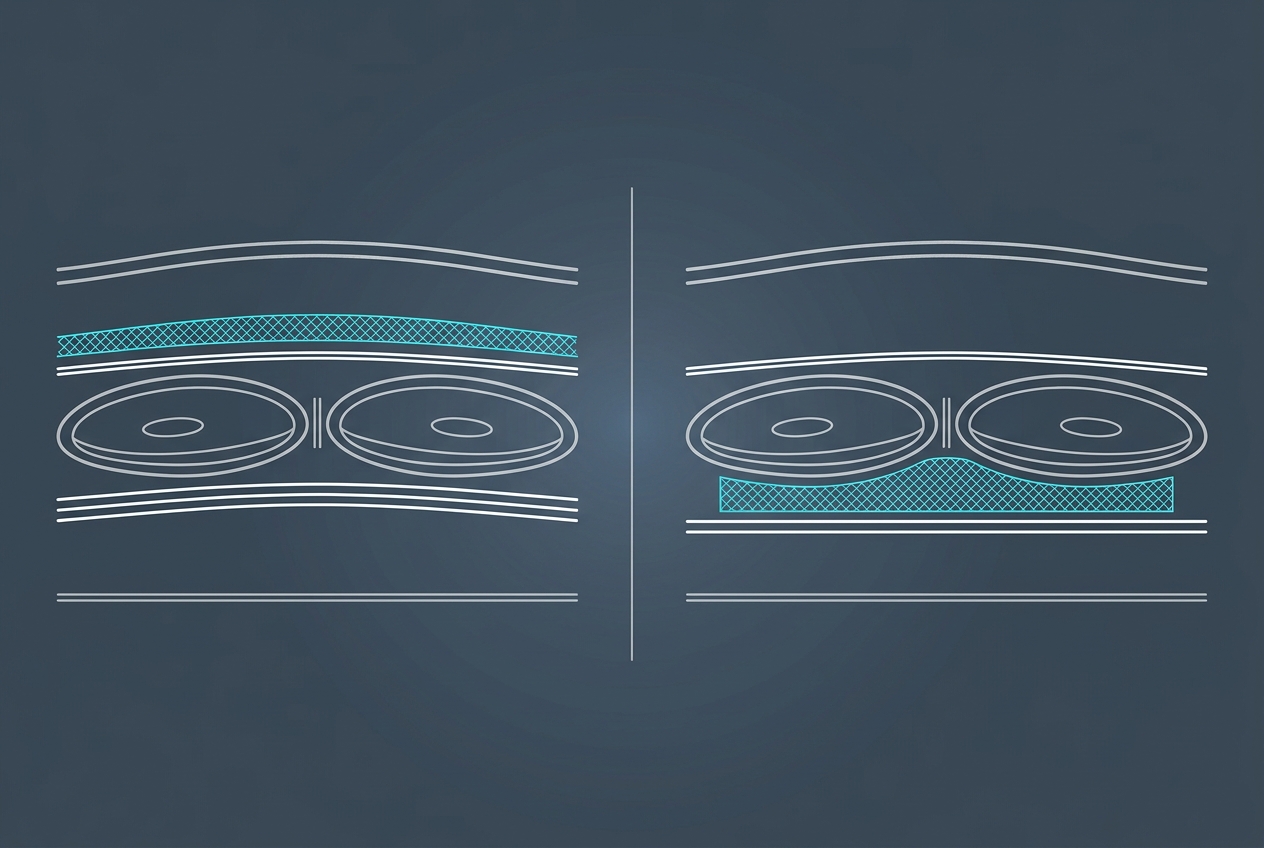
Onlay vs sublay
Onlay sits above the fascia; sublay sits behind the muscle — the preferred, safer position.
The TESAR technique was designed precisely to place a sublay mesh through an anterior access, combining the benefits of both.
What types of mesh exist?
Meshes differ in material, structure, weight and behavior, and each has its own indications. Broadly:
- Permanent synthetic: polypropylene, polyester and ePTFE (and newer cPTFE, PVDF) — durable, long-term reinforcement.
- Absorbable synthetic: e.g. polyglycolic-acid (Dexon®) or polyglactin 910 (Vicryl®), used mainly in intraperitoneal repairs.
- Biosynthetic: three-dimensional scaffolds (e.g. Gore® BIO-A®, TIGR® Matrix) that support the repair, are colonized by new tissue and are fully absorbed over months — leaving the patient’s own collagen.
- Composite / hybrid: combine absorbable and non-absorbable fibers (e.g. OviTex®, Zenapro®) to balance lasting reinforcement with less permanent foreign material.
- Dual meshes: designed for intraperitoneal placement, with a barrier surface to reduce adhesions to the bowel (e.g. Phasix™ ST).
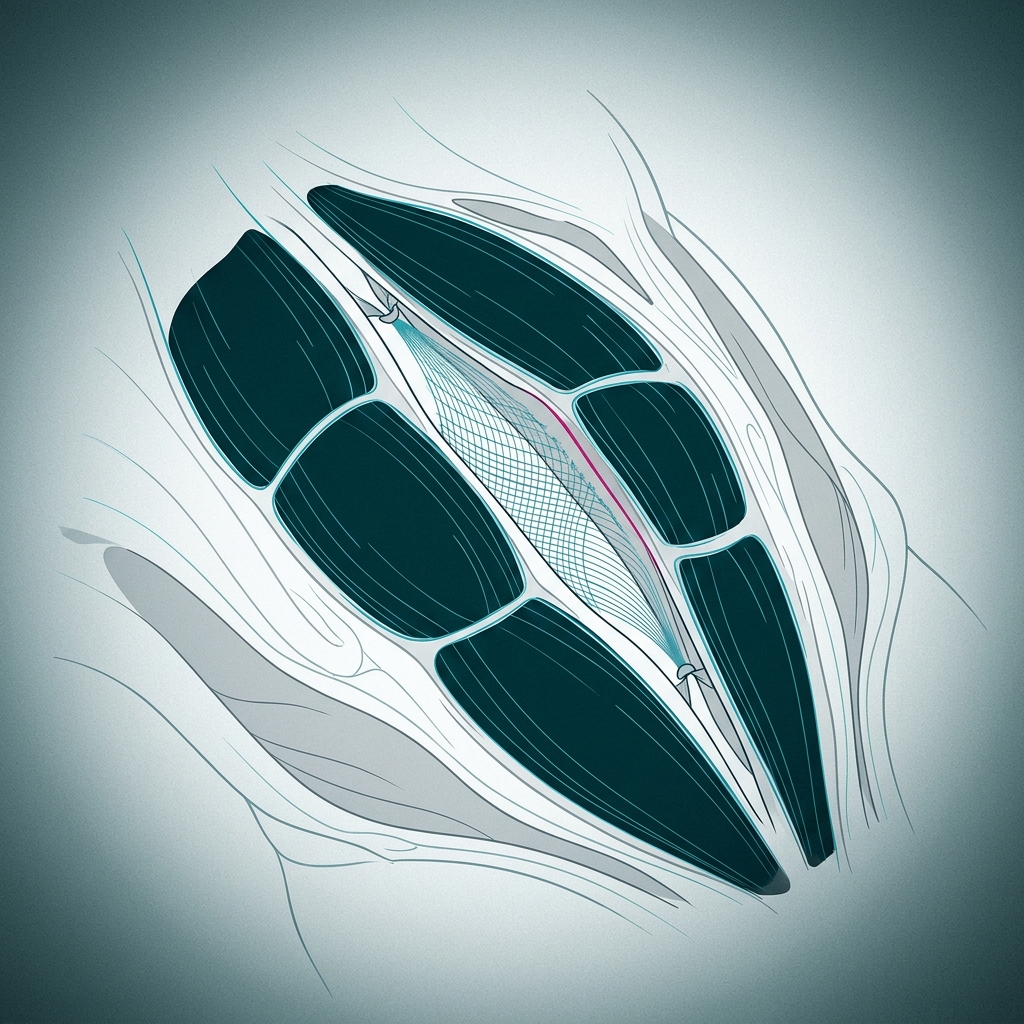
For women of childbearing age
Fully resorbable biosynthetic meshes are particularly interesting when future pregnancies are possible: they reinforce the repair while it heals and then disappear, leaving no permanent implant behind.
Is mesh always used for diastasis recti surgery?
No. A simple diastasis may be repaired by plicating the rectus muscles without mesh. European Hernia Society guidance suggests reinforcement when there is an associated umbilical hernia of about 1 cm or larger, or when extra strength is judged to lower the recurrence risk.
Where is the mesh placed in the abdominal wall?
It can sit intraperitoneally, preperitoneally, retromuscularly or onlay (in front of the fascia). When indicated and feasible, the retromuscular (Rives–Stoppa) plane is preferred because it is the safest for infection and occurrence.
What is the best mesh for a woman who may have another pregnancy?
Fully resorbable biosynthetic meshes are of particular interest for women of childbearing age: they reinforce the repair while it heals and are then completely absorbed, leaving no permanent implant.
Are permanent meshes safe?
Permanent synthetic meshes (polypropylene, polyester, PTFE) provide durable reinforcement and are widely used. The choice of material and plane is individualized to the patient, the defect and whether a hernia is present.