Functional anatomy of the abdominal core
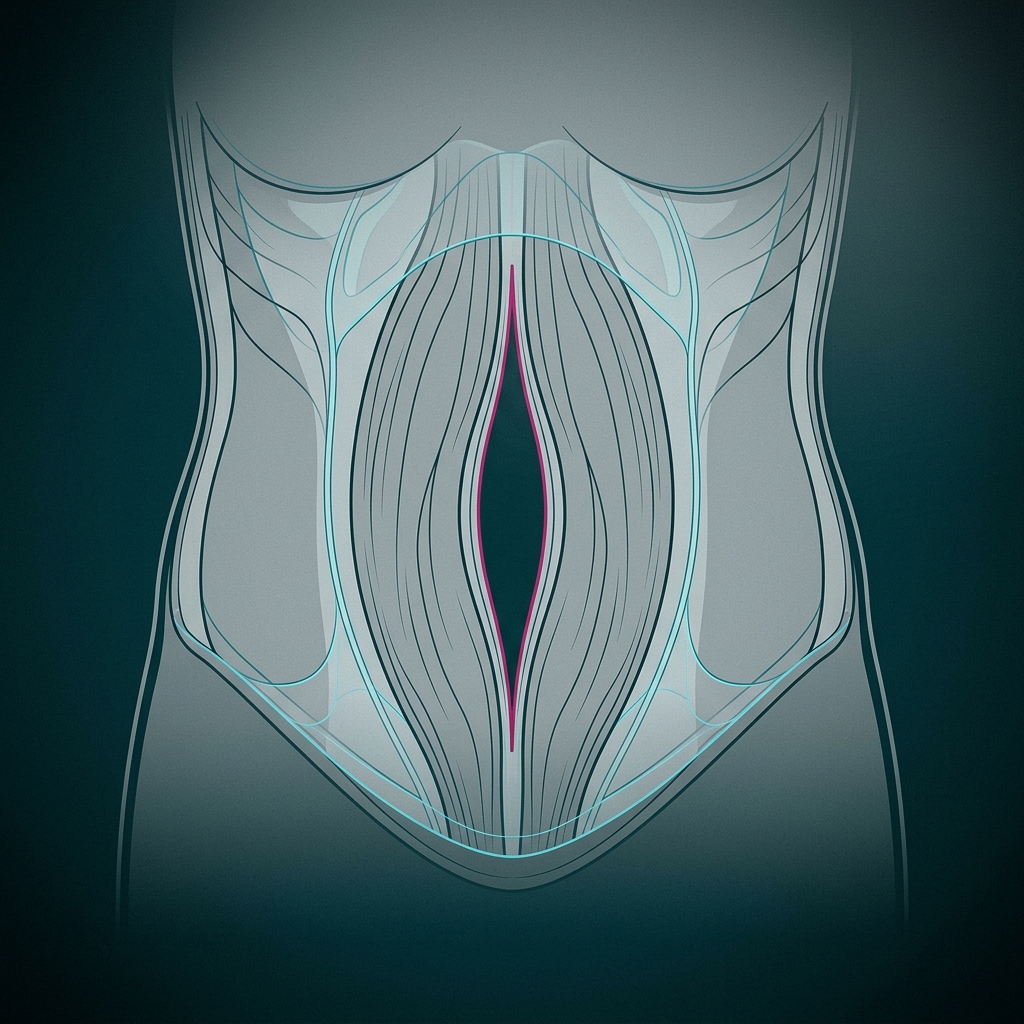
The abdominal core is a 'box' of muscles — the rectus abdominis at the front, the obliques and transversus at the sides, the diaphragm above and the pelvic floor below — all joined at the midline by the linea alba. Diastasis recti develops when this seam loses tension, so the anatomy explains both the symptoms and the treatment.
To understand diastasis recti you have to picture the system it affects. The abdominal core is not a single muscle but an integrated “abdominal box” — several muscle groups joined on the midline by the linea alba and closed above by the diaphragm. When the linea alba loses tension, the whole box loses synergy, and that is what produces the symptoms.
What is the abdominal core (the 'abdominal box')?
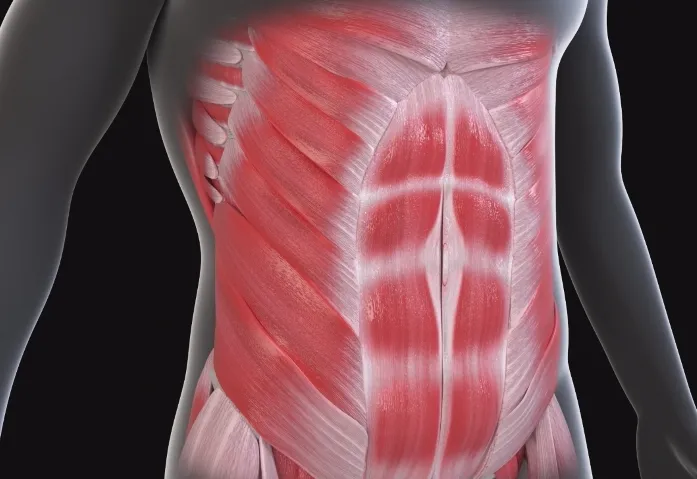
The abdominal core is an integrated muscular system responsible for the stability and mobility of the trunk and for correct posture. It is increasingly described as the abdominal box: a muscular box closed at the top by the diaphragm, the muscle that separates the chest from the abdomen and regulates intra-abdominal pressure.
Muscles that work together
Correct function depends on balanced, coordinated activity of the rectus abdominis (forward flexion, front-wall support), the obliques and transversus (stability, rotation, containment), the paraspinals and quadratus lumborum (spine and posture), the pelvic floor (organ support and continence), the glutes and hip flexors (pelvic balance) and the diaphragm (breathing and pressure).
One integrated 'box'
The core is a muscular box closed above by the diaphragm, not a set of separate straps.
Use it or lose it
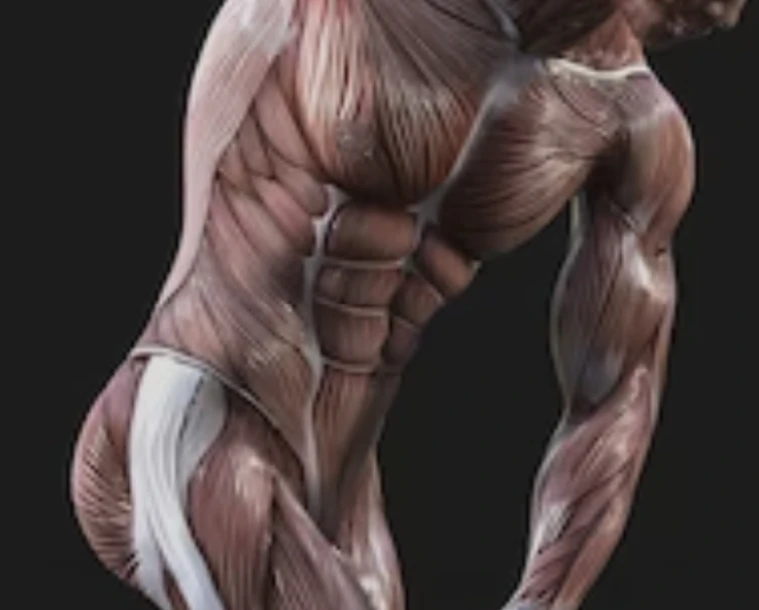
A muscle keeps its tone only by working; when it under-works it becomes hypotrophic and less efficient.
Why is the linea alba the key structure?
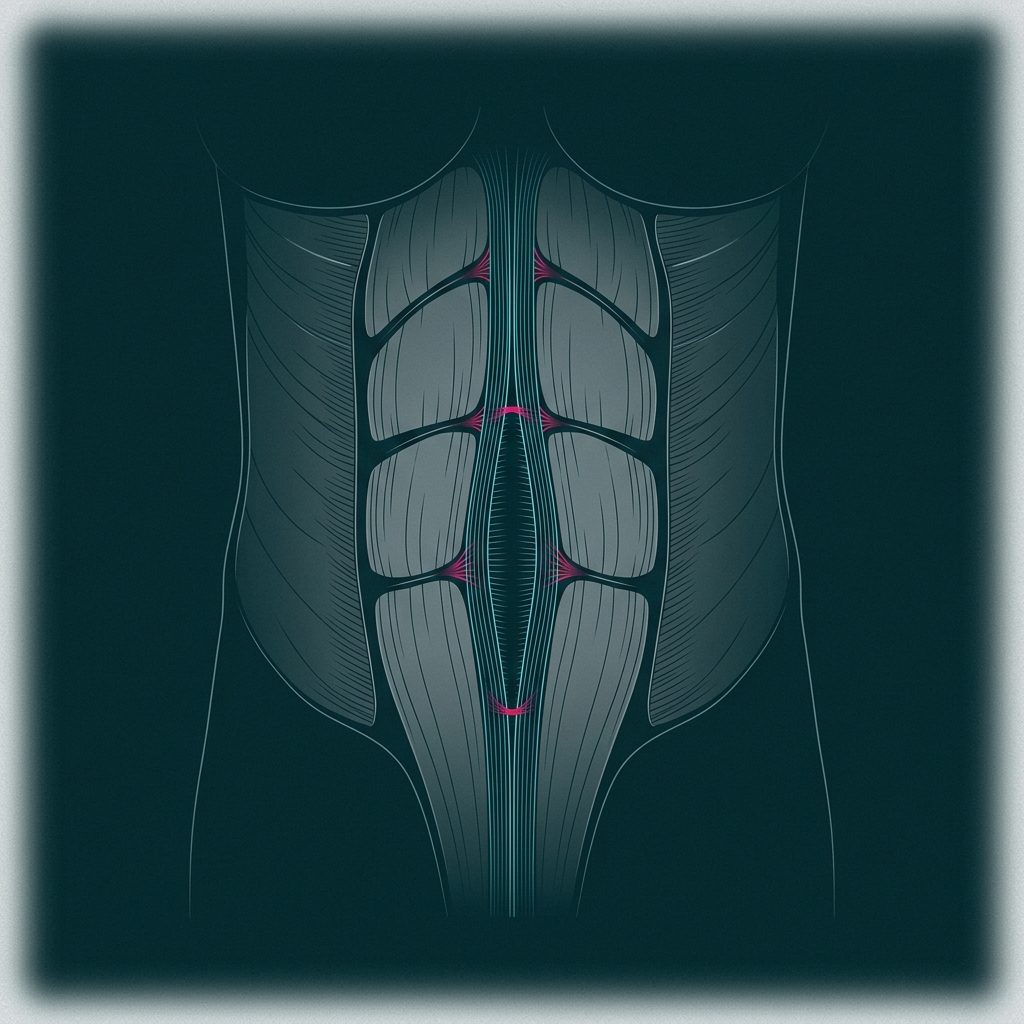
The linea alba is the tendinous line joining the two rectus muscles from the sternum to the pubis. It is connective tissue, not muscle, and it is the point through which the two halves of the abdomen pull against each other. When it is pathologically widened and lax it can no longer allow the progressive tensioning of the wall — the wall becomes mechanically ineffective.
Connective, not contractile
Because it is connective tissue, you cannot ‘build up’ the linea alba like a muscle. Rehabilitation reduces the load on it and restores control; when it is very stretched, surgery can rebuild the midline.
Muscle trophism and the 'underactive' wall
A skeletal muscle keeps its trophism — its health, volume and tone — by being used. If it is not used, or used poorly, it becomes hypotrophic and loses strength; overuse or certain conditions can make it hypertrophic. In diastasis the anterior wall becomes underactive: when a muscle stays partly inactive for a long time it gradually loses trophism and becomes less efficient, so the sensation and appearance of bulging increase.
Because these muscles belong to the wider abdominal box, when one component under-performs the whole system loses synergy and compensations appear elsewhere — which is exactly why a diastasis can cause such varied symptoms.

Why it looks bulged
An underactive wall no longer holds the contents in, increasing both the sensation and the look of bulging.
Effects on posture and dynamic function
Standing, a pathological linea alba fails to give the midline enough central tension. The dorso-lumbar fascia then pulls the anterior muscles toward the spine without an equal counter-pull on the midline. This imbalance can accentuate lumbar lordosis (back pain), tend to “open” the pelvic floor (favoring incontinence), and reduce the quality of abdominal contraction (affecting digestion and bowel regularity). When the central element fails, the effect cascades across the whole unit — function, shape and overall wellbeing.
What is the abdominal core or 'abdominal box'?
It is the integrated system of muscles — rectus, obliques, transversus, pelvic floor, back and hip muscles, closed above by the diaphragm — that stabilizes and moves the trunk. The linea alba is the central seam that ties the front of it together.
What does the linea alba do?
The linea alba is the connective seam joining the two rectus muscles from sternum to pubis. It lets the wall tension itself. When it widens and slackens, the wall can no longer tension properly and becomes underactive.
Can you rebuild the linea alba with exercise?
No — it is connective tissue, not muscle, so it cannot be bulked up. Exercise reduces the load on it and restores core control, while a very stretched linea alba may need surgical repair.
Why does diastasis affect posture and the pelvic floor?
A slack midline lets the back fascia pull the front muscles toward the spine without a midline counter-pull, which can increase lumbar lordosis, alter pelvic-floor function and reduce the quality of abdominal contraction.