Exercises and rehabilitation for diastasis recti
Targeted rehabilitation — hypopressive abdominal gymnastics (GAH) and transversus training — is the first-line, non-surgical approach to diastasis recti and helps many people restore abdominal-wall and pelvic-floor tone. Classic crunches and sit-ups tend to make it worse and should be avoided.
Diastasis recti is very often associated with marked hypotonia of the abdominal wall, so functional treatment must reawaken the tonic muscle fibers. The most useful method here is hypopressive abdominal gymnastics (GAH): it does not ‘force the gap shut’ but restores resting tone and control of the deep core without loading the fragile midline.
What is hypopressive abdominal gymnastics?
Hypopressive abdominal gymnastics (GAH) was developed by Dr. Marcel Caufriez in Belgium in the 1980s, evolving from “diaphragmatic aspiration” techniques first used for postpartum rehabilitation. Its goal in diastasis is to make the muscles of the anterior wall work as effectively as possible. It is a global postural reprogramming method that combines specific postures with an expiratory breath-hold, stimulating the expiratory centers while inhibiting inspiration.
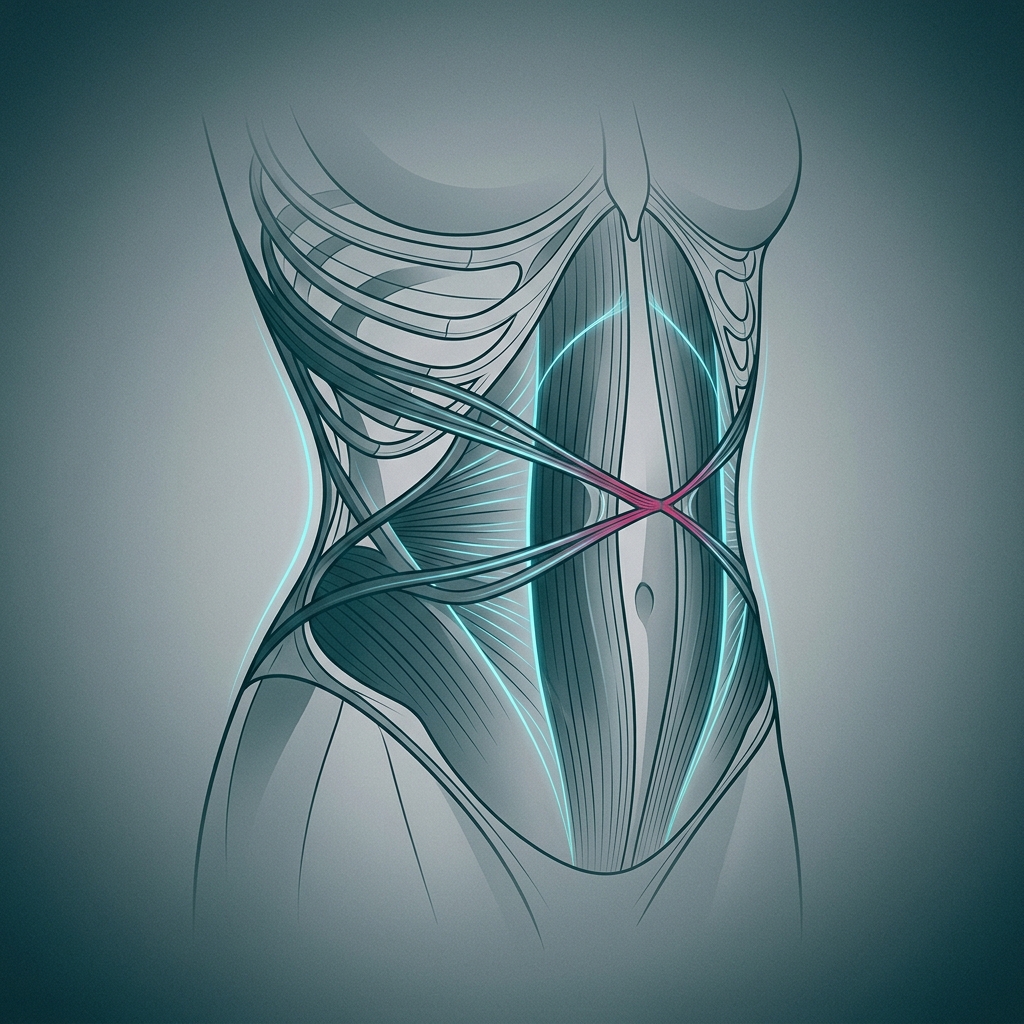
Rhythmic and postural
The exercises are rhythmic, repetitive and sequential, with a strong postural component. The aim is to reduce and better manage pressure inside the abdomen while raising the resting tone of the transversus, obliques, rectus and the pelvic floor.
What are the benefits, and what does the evidence show?
Practiced consistently, hypopressive training has measurable effects. Over an average of six months, studies report a significant rise in pelvic-floor tone (about 58% in basal tone), improved abdominal-wall tone, and an average reduction of around 8% in waist circumference.
- Tonic activation of the wall so it manages pressure without pushing down on the pelvic organs.
- Reduction in abdominal circumference and in the functional expression of the diastasis.
- Prevention or improvement of back pain.
- Support against urinary incontinence and visceral ptosis via reflex pelvic-floor activation.
- Decompression of pelvic lymphatics, with a possible improvement in lower-limb circulation.
What should you avoid?
Classic “crunch” exercises are to be avoided: they raise intra-abdominal pressure and push the rectus muscles further apart, worsening the doming. Early on, favor breathing-led deep-core work and controlled movements where you can keep the midline flat; postpone anything that makes the belly tent outward until control improves.
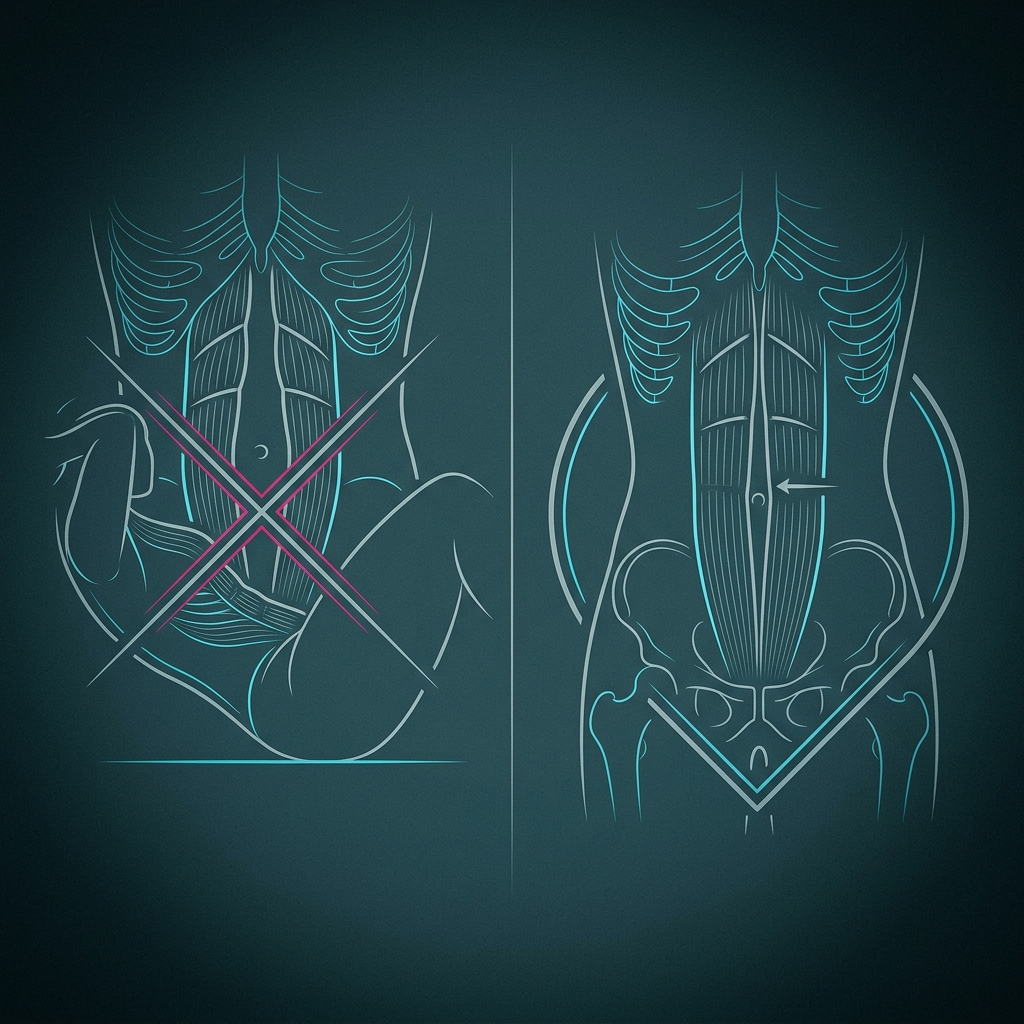
Quality over crunches
The point is not how many repetitions you do but how well you restore tone and control. Slow, controlled activation trains the wall you actually want to strengthen.
How does rehabilitation fit with surgery?
Anatomical correction of a diastasis remains a surgical matter — exercise cannot re-close a stretched linea alba. But hypopressive training is valuable both before surgery (better pre-operative tone means a more satisfying result) and after it, because it restores function without specifically loading the freshly repaired midline. Start any postpartum program only once your clinician has cleared you.
What are the best exercises for diastasis recti?
Hypopressive abdominal gymnastics (GAH) is the most indicated: postures combined with an expiratory breath-hold that raise the resting tone of the deep core and pelvic floor without loading the midline. Transversus activation and breathing come first.
What exercises should you avoid with diastasis recti?
Avoid crunches, full sit-ups and heavy straining that raise intra-abdominal pressure and make the midline dome, because they push the rectus muscles further apart. Favour controlled deep-core work that keeps the belly flat.
Can exercise close a diastasis recti completely?
Exercise restores tone, control and function and can reduce the functional expression of a diastasis, but a stretched linea alba cannot be re-closed by training alone — anatomical correction is a surgical matter. Rehab remains valuable before and after surgery.
When can you start exercises after childbirth?
Begin gentle hypopressive rehabilitation only once your clinician has cleared you — generally at least 6–8 weeks after a vaginal birth and a little longer after a cesarean.