Recovery after diastasis recti surgery
Recovery after diastasis recti surgery involves managing mild pain, wearing an abdominal support garment and a graded return to activity, with most people back to desk work in about two to three weeks. Full return to sport and heavy lifting is staged over the following weeks under the surgeon's guidance.
Knowing what recovery looks like removes much of the worry. After diastasis surgery the wall needs time to heal into a mature, strong repair before it is stressed. This page walks through the usual postoperative course and the complications worth knowing — always guided by your surgeon’s specific instructions.
What does the postoperative course look like?
Pain and discomfort depend on the operation performed and are usually controlled with standard analgesics. Drains may be used depending on the technique — in open procedures typically two, with one removed around day 4 and the second around day 7–8. Skin sutures are generally removed at about 12–14 days when healing is uncomplicated.
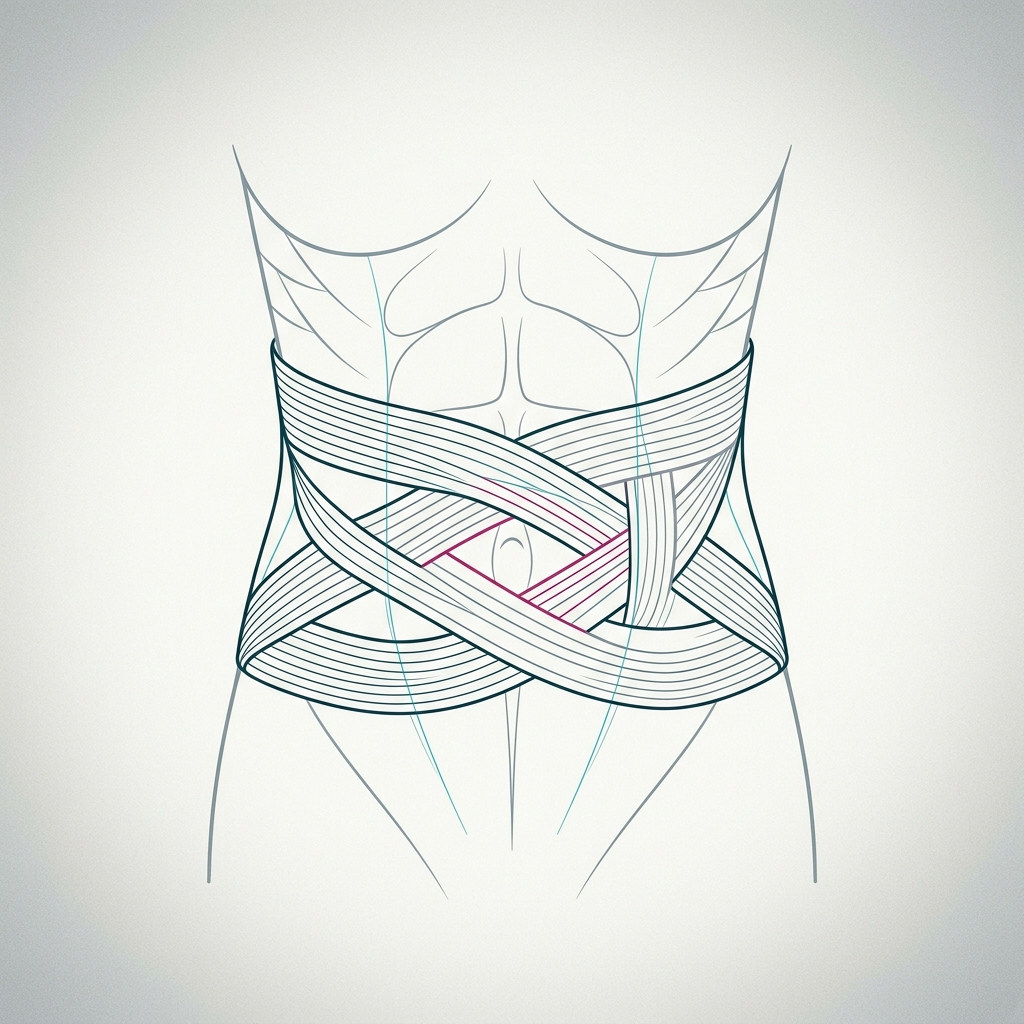
The compression garment
A supportive garment is generally recommended for around 30 days. It steadies the wall, eases movement and makes coughing or standing up more comfortable while the repair settles.
When can you return to activity?
Return to activity is deliberately graded. Be very cautious during the first month, then allow roughly a further 60 days before strenuous exercise. The aim is to let the fascial repair progress to effective, mature healing before it is loaded mechanically. Reintroducing gentle hypopressive core work at the right time supports the repair without overloading the midline.
Graded, not rushed
Rushing the heavy phase is the main avoidable mistake. Your surgeon sets the exact timeline based on the procedure and your healing.
Which general complications should you know about?
These can occur after abdominal-wall surgery in general:
- Hematoma: bleeding into the space created by the dissection.
- Seroma: a collection of serous fluid causing swelling, tightness or discomfort; subcutaneous drains reduce the risk, and persistent seromas may need treatment.
- Abnormal scarring: hypertrophic scars, especially with long incisions, for which treatments exist.
- Altered sensation: numbness or hypersensitivity in the operated area.
Which complications are specific to laparo-abdominoplasty?
The most extensive open procedure carries two particular risks. Umbilical ischemia can occur because a full abdominoplasty separates the navel from its skin blood supply, and a combined hernia repair can affect its deeper supply; it ranges from a small area of suffering to complete loss of the umbilicus, which is uncommon and rarely dangerous but can be managed with negative-pressure (VAC) therapy and, if needed, a small later reconstruction. After a full abdominoplasty, where the skin flap is mobilized, problems with the blood supply to the umbilicus and delayed wound healing are recognized complications. They follow a biological healing timetable and are managed with dressings and follow-up. Minimally invasive techniques avoid the flap and do not carry this specific risk.
To see documented outcomes of diastasis repair, view the real results on federicofiori.com.
How does recovery differ after minimally invasive techniques?
Endoscopic repairs such as TESAR rebuild the midline through small incisions, without a large skin flap. In the published TESAR series the median hospital stay was 3 days (range 2 to 10) across 120 consecutive operations (Hernia 2026; DOI 10.1007/s10029-026-03808-2). Return to work, sport and heavy lifting is agreed case by case. Full figures, with the source, are on the technique page.
How long is recovery after diastasis recti surgery?
Skin sutures usually come out at 12–14 days and a compression garment is worn for about 30 days. Be cautious for the first month, then allow roughly a further 60 days before strenuous exercise, following your surgeon's timeline.
How long is the hospital stay after minimally invasive diastasis repair?
In the published TESAR series the median hospital stay was 3 days (range 2 to 10) across 120 consecutive operations (Hernia 2026). Return to work and sport is agreed case by case. Full figures, with the source, are on https://www.federicofiori.com/en/tesar-technique
Do you need to wear an abdominal binder or garment?
Yes, a compression garment is generally recommended for about 30 days after surgery. It supports the wall, improves comfort and helps the repair settle.
What complications can occur after diastasis surgery?
General ones include hematoma, seroma, abnormal scarring and altered sensation. After a full abdominoplasty, where the skin flap is mobilized, problems with the blood supply to the umbilicus and delayed wound healing are recognized complications; they are managed with dressings and follow-up. Minimally invasive techniques avoid the flap and do not carry this specific risk.
When can you exercise again after surgery?
Gentle hypopressive core work is reintroduced when your surgeon allows, generally after a cautious first month and roughly 60 more days before strenuous activity, so the repair can heal into mature, strong tissue first.