Diastasis recti in men
Diastasis recti affects men too, usually linked to visceral (belly) fat, chronic straining or coughing, heavy lifting, and collagen changes with age. The symptoms and the risk of an associated hernia are the same as in women, and treatment follows the same principles.
Diastasis recti is often thought of as a postpartum problem, but it affects men too, and the functional impact is just as real. In men the linea alba usually widens under sustained load rather than pregnancy — most often driven by visceral fat and increased intra-abdominal pressure over time.
Why do men get diastasis recti?
The main driver is visceral fat. Unlike subcutaneous fat, visceral fat sits deep around the organs and pushes directly on the wall, so a bulky abdomen keeps intra-abdominal pressure persistently high. Over time this continuous load fatigues the fascial structures of the midline and favors lateral separation of the rectus muscles — especially when the muscles are untrained. Visceral fat is also linked to systemic inflammation and metabolic changes that reduce connective-tissue quality.
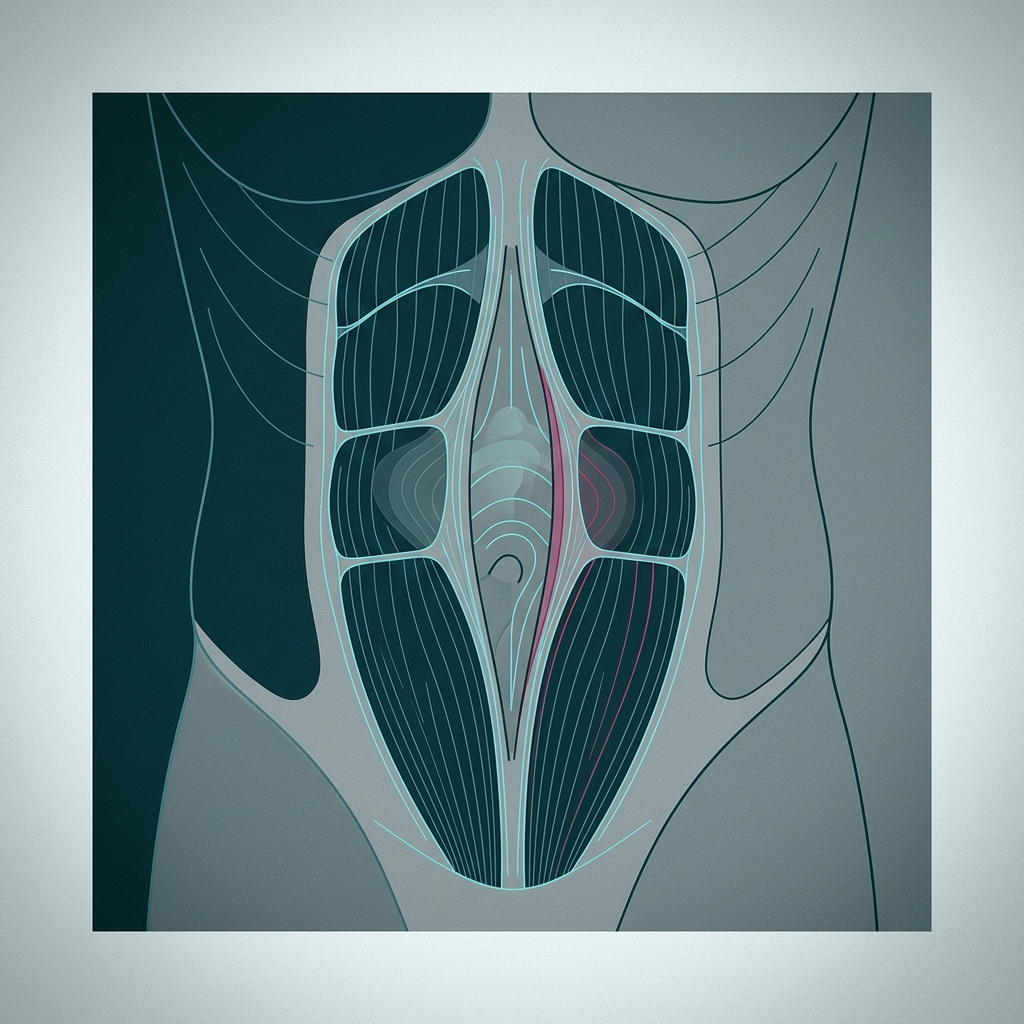
Pressure over time
Unlike the rapid stretch of pregnancy, the male diastasis usually develops slowly, as steady internal pressure loads a midline that is already the wall’s weakest line.
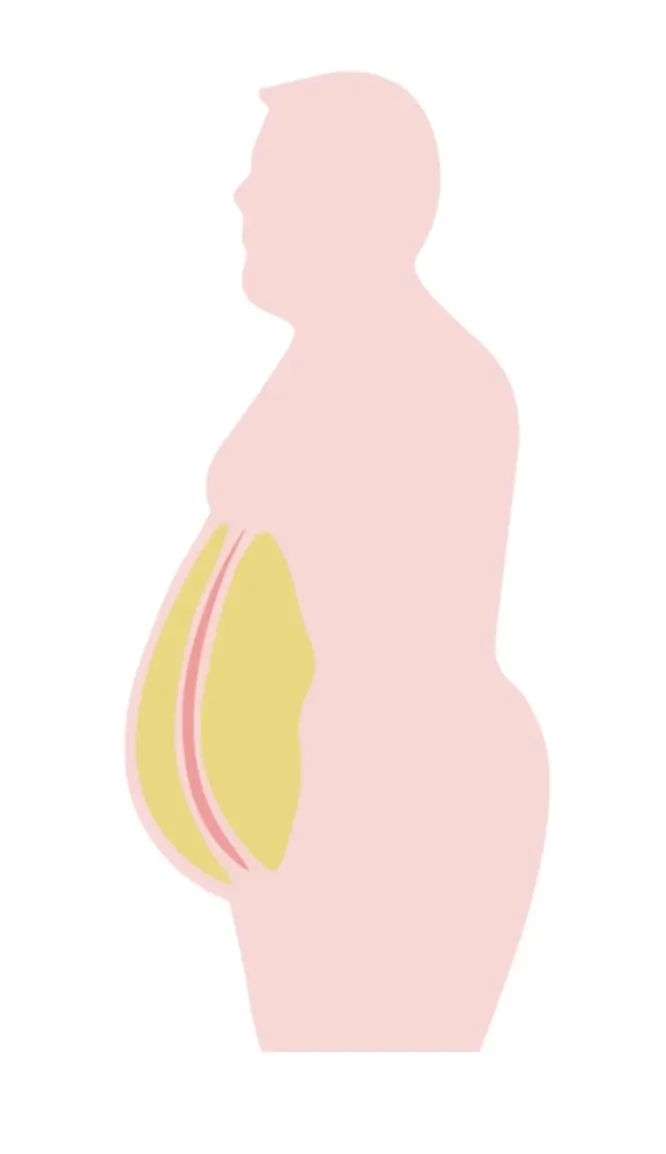
Pressure from within
Visceral fat sits deep around the organs and pushes directly on the wall, keeping intra-abdominal pressure high.
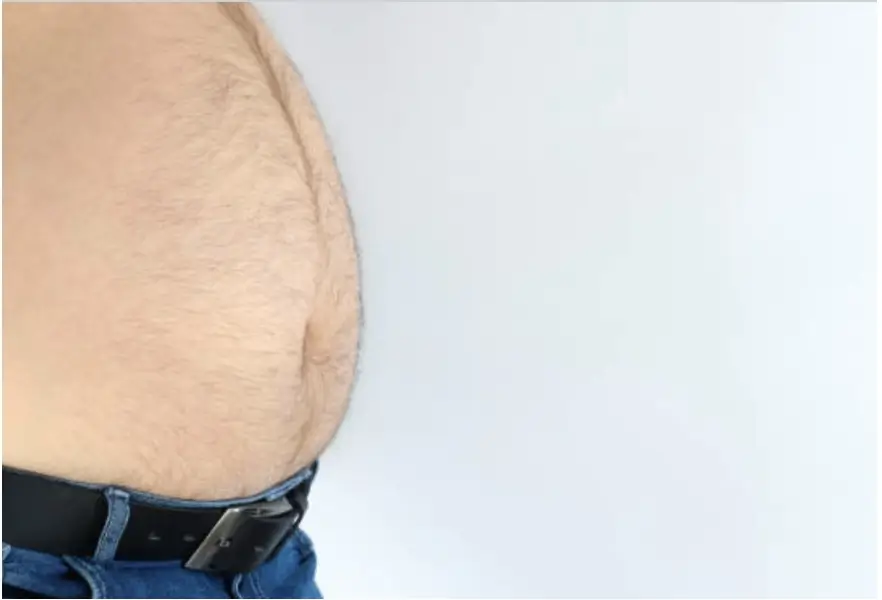
A slow widening
In men the midline usually widens gradually under this sustained internal load rather than from pregnancy.
What other factors contribute in men?
- Chronic cough and respiratory disease (e.g. COPD, heavy smoking): repeated pressure peaks cause micro-injury and weakening of the linea alba.
- Excessive or poorly performed exercise (e.g. heavy weightlifting): high abdominal pressure and repeated microtrauma without good technique or breathing.
- Sedentary lifestyle: reduced muscle trophism and support, leaving the wall vulnerable to sudden effort.
- Collagen and genetics: low type I/III collagen quality makes the linea alba more fragile; an inherited predisposition can show as inguinal or umbilical hernias too.
- Aging: less elasticity, slower collagen regeneration and muscle hypotrophy.
- Nutrition: diets poor in protein and micronutrients (vitamin C, zinc) impair tissue quality and repair.

Repeated pressure peaks
A chronic cough hits the linea alba with repeated pressure spikes that fatigue and weaken it over time.
How does it look and feel in men?
The classic sign is a visible ridge or dome along the midline, often most obvious above the navel when rising from lying down or straining, sometimes with a sense of core weakness or a persistent “pooch.” Because an umbilical or epigastric hernia can look similar — and is more likely alongside a diastasis — assessment matters.
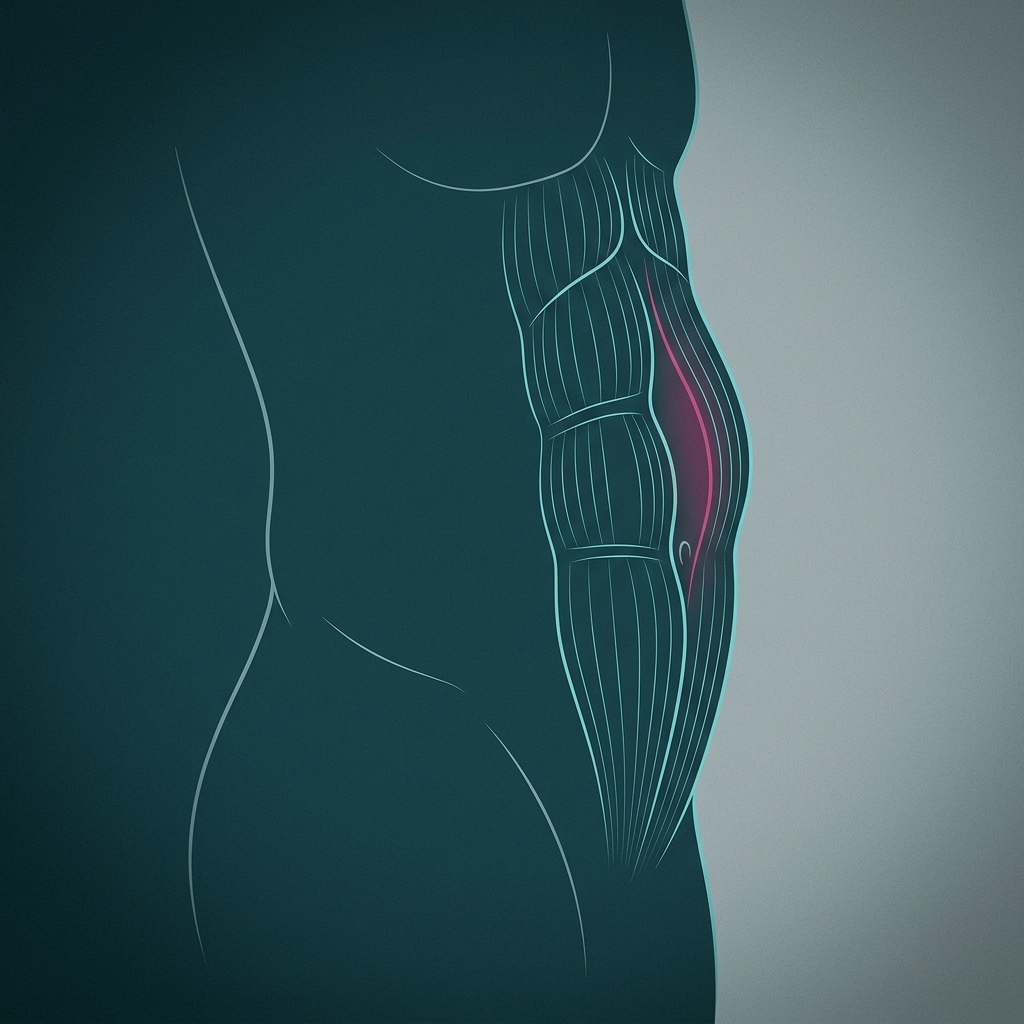
Rule out a hernia
A firm, tender or non-reducible lump on the midline can signal a hernia rather than a simple diastasis. An ultrasound tells the two apart and guides treatment.
How is diastasis recti treated in men?
The approach mirrors that in women. Start with guided core rehabilitation and address contributing factors — visceral fat, lifting technique, cough, nutrition. When the gap is wide, symptomatic, or associated with a hernia, surgical repair — sometimes with a mesh — is considered using a morpho-functional approach.
Documented before-and-after results of diastasis and abdominal-wall repair are on the hub, federicofiori.com.
Can men get diastasis recti?
Yes. Although best known after pregnancy, men develop diastasis recti too. In men the pathogenesis is different and usually driven by visceral fat and sustained intra-abdominal pressure that widen the linea alba over time.
What causes diastasis recti in men?
The leading cause is visceral fat raising intra-abdominal pressure. Other contributors include chronic cough, heavy or poorly performed weightlifting, a sedentary lifestyle, poor collagen quality or genetics, aging and inadequate nutrition.
How do you know if a belly bulge is diastasis or a hernia?
A soft ridge along the midline that appears when you sit up suggests diastasis, whereas a firm, tender or non-reducible lump may be a hernia. An ultrasound distinguishes the two and guides treatment.
How is diastasis recti treated in men?
First-line treatment is guided core rehabilitation plus addressing visceral fat, lifting technique, cough and nutrition. Wide, symptomatic or hernia-associated cases are assessed for surgical repair, sometimes with mesh reinforcement.