Diastasis recti self-assessment at home
You can screen for diastasis recti at home in about two minutes: lie on your back, lift your head slightly and press your fingertips along the midline above and below the navel to feel for a gap between the muscles. A gap wider than about two fingerbreadths suggests a diastasis, but a self-check is a screen, not a diagnosis.
You can get a reasonable first impression of a diastasis in about two minutes, lying down, using only your fingers. This self-check has no diagnostic value on its own, but in more obvious cases it gives a fairly reliable indication of whether a diastasis may be present — a useful starting point before an ultrasound and a professional assessment.
How to do the self-check, step by step
Work slowly and without holding your breath. The test simply reveals how far apart the rectus muscles sit and how well the linea alba resists a small curl-up.
- Lie on your back with your knees bent and the soles of your feet resting on the floor.
- Place one hand on the midline with your fingers pointing down, just above the navel.
- Lift your head and shoulders slightly off the floor in a small crunch — do not flex your neck or bring your chin to your chest.
- Gently move your fingers up and down along the midline between the muscles.
- If a diastasis is present you will feel a gap between the two rectus muscles; repeat at, above and below the navel.
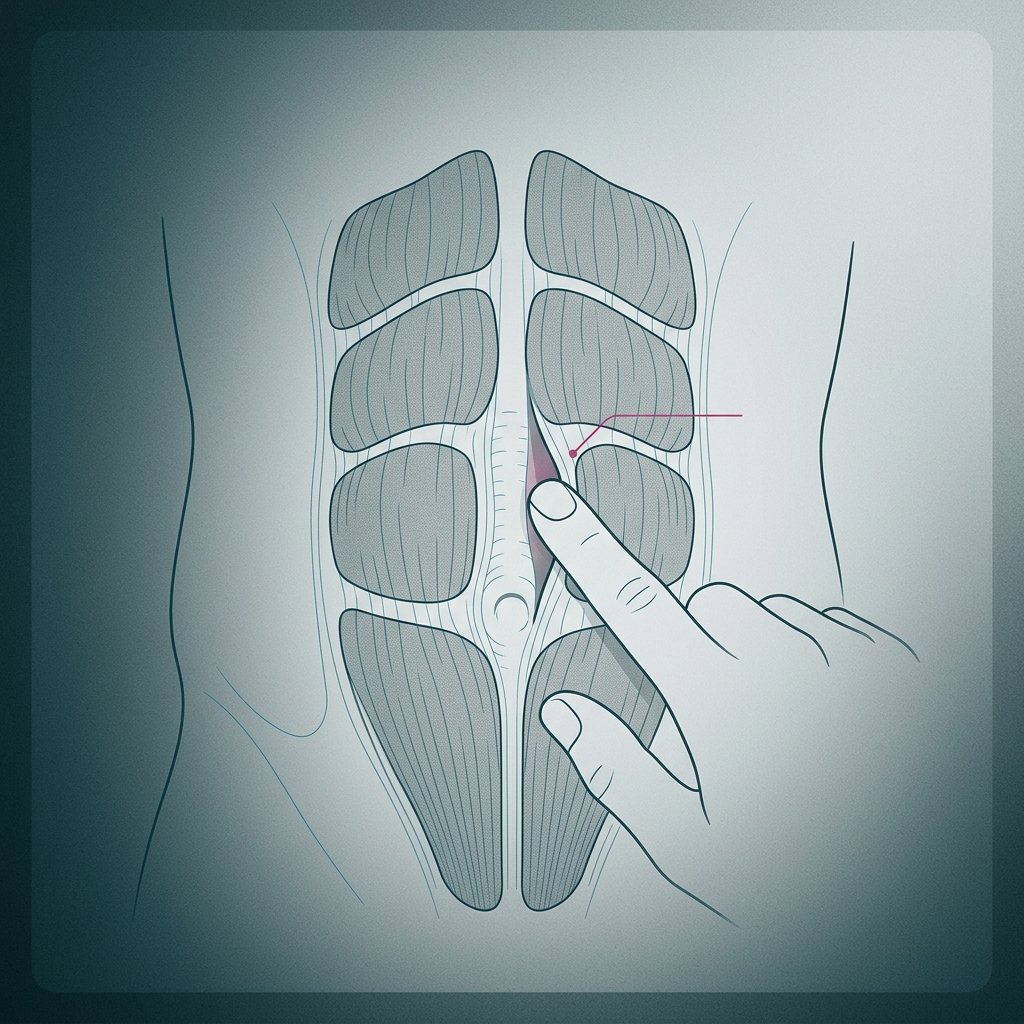
What you are feeling
The soft “valley” between the two firm muscle bellies is the widened linea alba. In some cases you may also see or feel a ridge — the “fin” — running along the midline from the lower breastbone toward the navel.
How to interpret what you feel
Roughly, one fingerbreadth is about 1–1.5 cm. A gap you can sink your fingers into beyond about 2 cm raises a clinical suspicion of diastasis. Width matters, but so do the depth and firmness of the floor: a shallow gap with a firm floor behaves very differently from a wide, deep one.
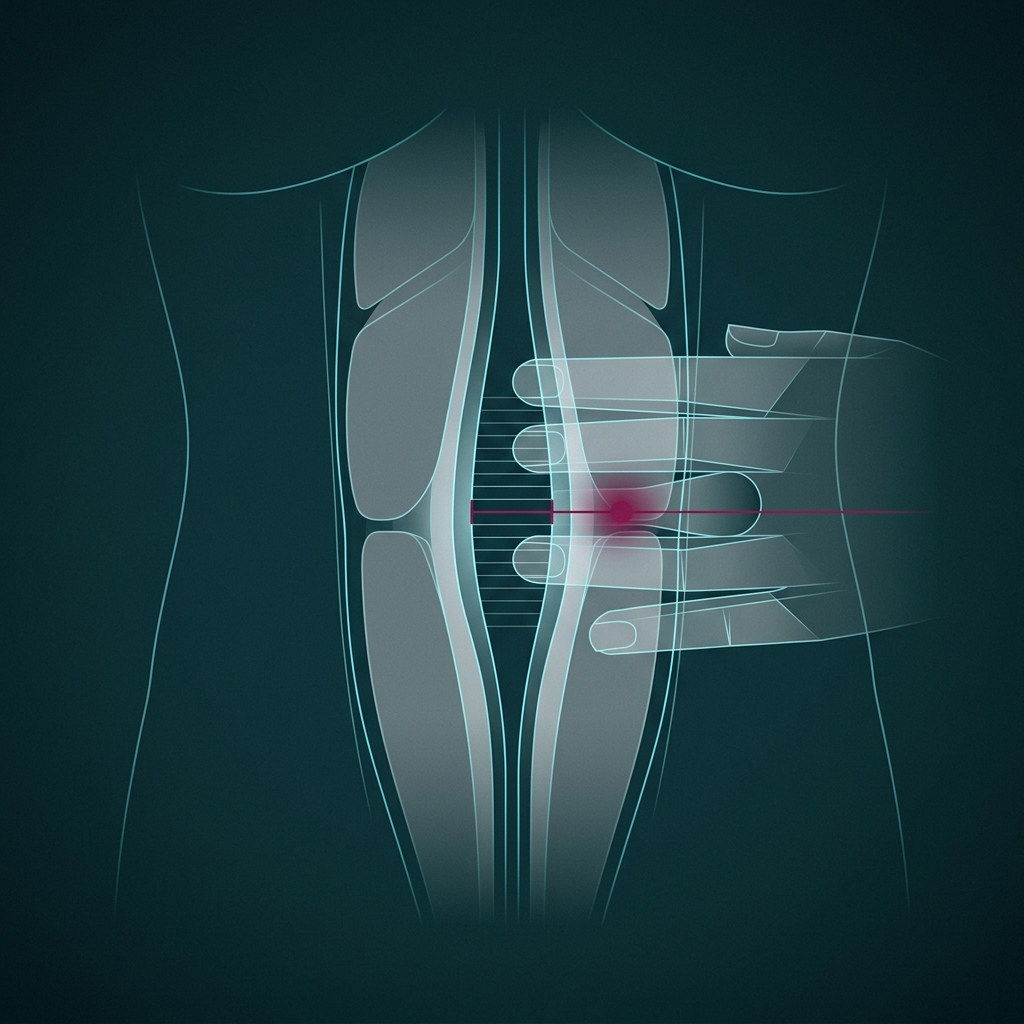
A screen, not a diagnosis
This maneuver has no scientific or diagnostic value by itself. If it is positive — or if you feel a firm or tender lump, which can indicate a hernia — confirm it with an ultrasound.
What to do next
If the test suggests a diastasis, start with guided rehabilitation and book an ultrasound for an objective measurement. While you assess, avoid full sit-ups and crunches: they raise midline pressure and can worsen the doming.
Not sure how to read your result? Emma moderates a patient community for exactly these first questions — see the pathway with Emma.
How do you check for diastasis recti at home?
Lie on your back with knees bent, place your fingers on the midline just above the navel, and lift your head and shoulders in a small curl-up. Feel for the gap between the two muscle edges and count the fingerbreadths.
How many centimeters of gap is a diastasis recti?
Roughly, one fingerbreadth is 1–1.5 cm. A midline gap you can sink into beyond about 2 cm raises a suspicion of diastasis, but width, depth and firmness all matter.
Is the finger self-test accurate?
It is a screening tool, not a diagnosis, and has no scientific value on its own. In obvious cases it is a fairly reliable indication, but any positive finding should be confirmed with an ultrasound.