The symptoms of diastasis recti
The symptoms of diastasis recti are non-specific and vary from person to person: a visible midline bulge or ridge, abdominal and low-back pain, poor posture, bloating and digestive discomfort, and sometimes urinary incontinence. Because none of these is unique to diastasis, a clinical assessment is what confirms the cause.
Diastasis recti is not a dangerous or rapidly evolving condition, yet it can cause genuinely disabling symptoms and, in some people, a true deformity of the abdominal wall. Its symptoms are non-specific — they can be caused by many other conditions — and, importantly, they are not proportional to the size of the gap. They fall into two groups: clinical-functional symptoms (what you feel) and morphological changes (what you see).
What does diastasis recti feel like?
It often begins as a vague sense of abdominal discomfort that is hard to define, and then declares itself as more specific complaints. Because these symptoms overlap with many other conditions, they need to be interpreted together with an examination and, where needed, an ultrasound.
- Abdominal pain: often around the peri-umbilical region, becoming more noticeable after meals or during physical activity.
- Abdominal bulging or bloating: the most visible sign of lost abdominal-wall tone, frequently the most bothersome, and sometimes painful.
- Back pain (dorsolumbar): reported far more often by women; very common after childbirth, sometimes disabling and often wrongly blamed only on the demands of early motherhood (breastfeeding, carrying the baby).
- Hip and pelvic pain: may coexist with back pain and with the postural changes that often develop after pregnancy.
- Urinary incontinence: from occasional leakage on exertion to more significant loss, often with a feeling of pelvic heaviness — a real impact on quality of life, especially for young, active women.
- Nausea and dyspepsia: slow digestion, post-meal heaviness and difficulty with bowel movements, including constipation of varying degrees.
- Hyperlordosis: an increased lumbar curve that can accompany the postural changes.
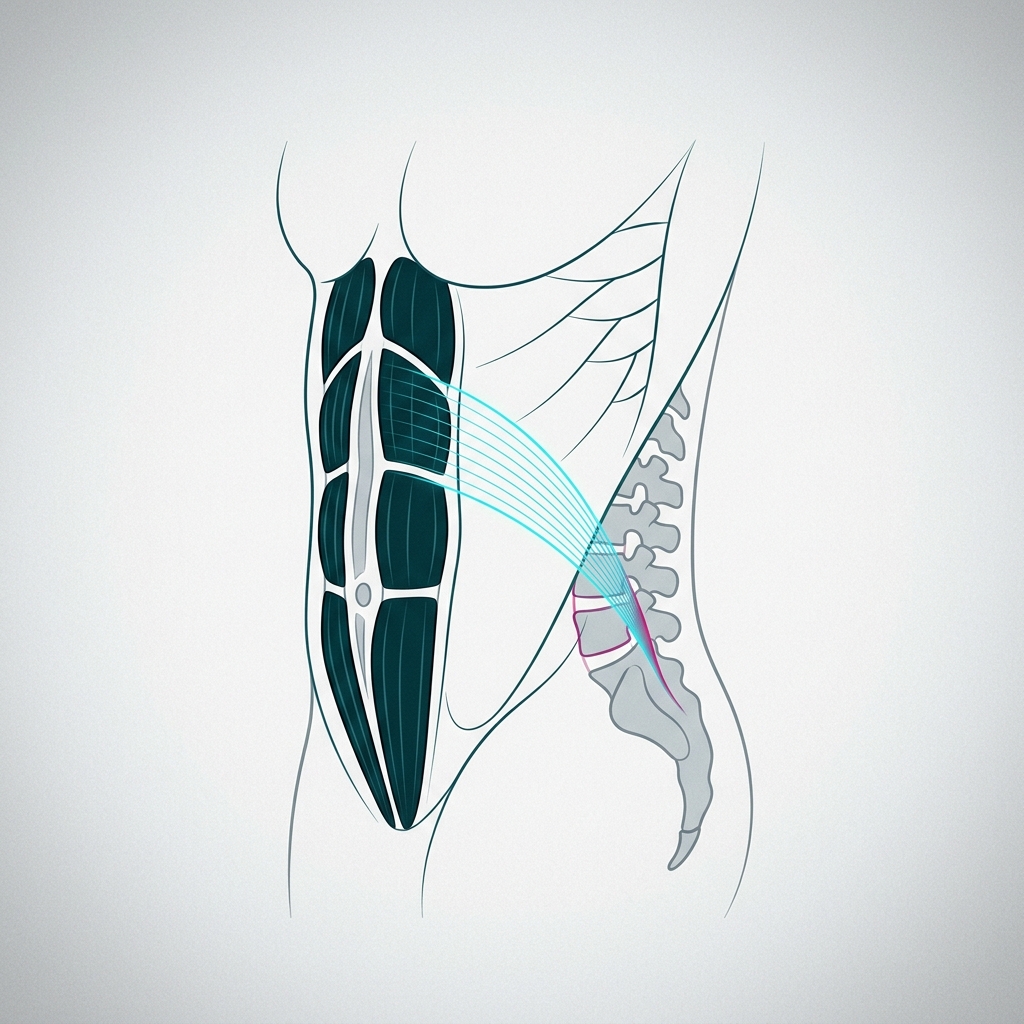
Why symptoms vary so much
Because the wall is part of the wider abdominal core, a weak midline can ripple out to posture, the pelvic floor and digestion — which is why two people with a similar gap can feel completely different.
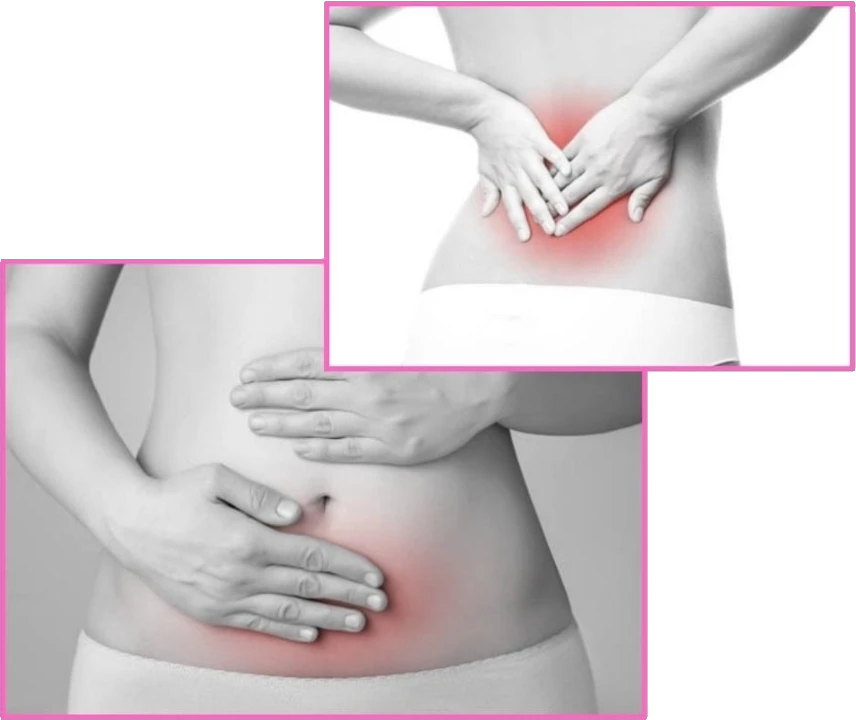
Many, and non-specific
Pain, bulging, back and pelvic pain, incontinence and digestive issues can all appear — and none is proportional to the gap.
Why is an umbilical hernia so often present?
Diastasis is frequently associated with an umbilical hernia — a protrusion of tissue from inside the abdomen through a defect at the navel. A soft ridge that appears when you sit up suggests diastasis, whereas a firm, tender or non-reducible lump may be a hernia. The distinction matters because it changes treatment, so it is confirmed on ultrasound.
What you see: the shape of the abdomen
Impaired wall function can produce a clearly visible change that patients tend to perceive negatively. Standing, the abdomen can look prominent, sometimes resembling a pregnancy; on effort or coughing a midline ridge — the “fin” — may appear. What is seen is the sum of the wall itself (toned, hypotrophic or under-functioning) and the skin and fat over it (scant, moderate or abundant), combined in many different ways.
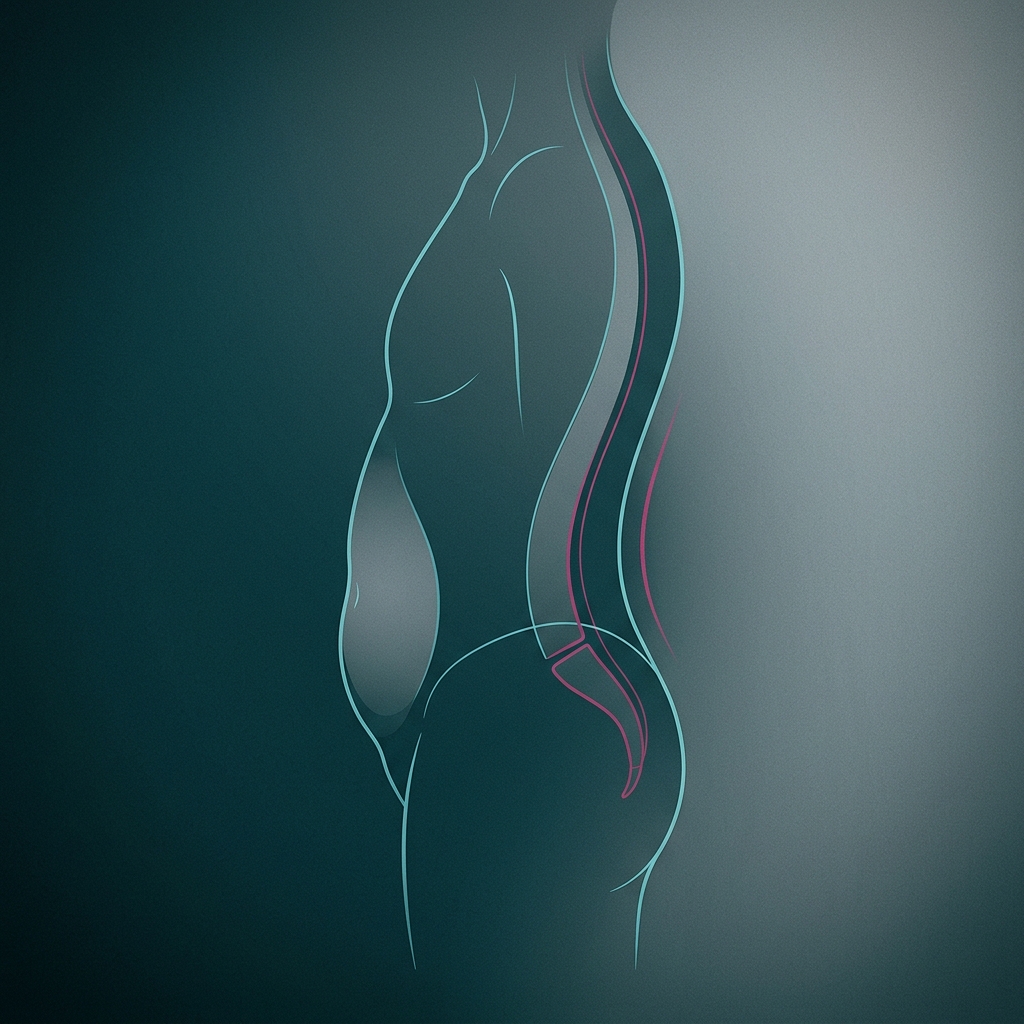
The ‘looking pregnant’ feeling
A persistently rounded, tense lower belly — especially after meals — is one of the most common and distressing descriptions. It comes from the wall no longer holding the contents in, not from fat alone.
What are the main symptoms of diastasis recti?
The most common are abdominal pain around the navel, visible bulging or bloating, and lower-back pain. Others include hip and pelvic pain, urinary incontinence, nausea and slow digestion, hyperlordosis, and a visible midline ridge on effort.
Can diastasis recti cause back pain?
Yes. Dorsolumbar (lower-back) pain is one of the most frequent complaints, particularly in women after pregnancy, because a lax midline alters how the core stabilizes the spine.
Does a bigger gap mean worse symptoms?
No. Diastasis symptoms are non-specific and are not proportional to the size of the gap. A narrow diastasis can be very symptomatic and a wide one relatively quiet.
Why does your belly look bloated or pregnant?
When the abdominal wall no longer tensions properly it stops containing the abdominal contents, so the belly protrudes — often worse after meals — which many patients describe as looking pregnant.