Rectus diastasis is one of the conditions I discuss most often in the clinic, and also one of the most misunderstood. Many patients arrive convinced they need surgery when they do not, and others dismiss real symptoms as merely cosmetic. My aim here is to help you place your own situation on the correct side of that line.
What exactly is rectus diastasis?
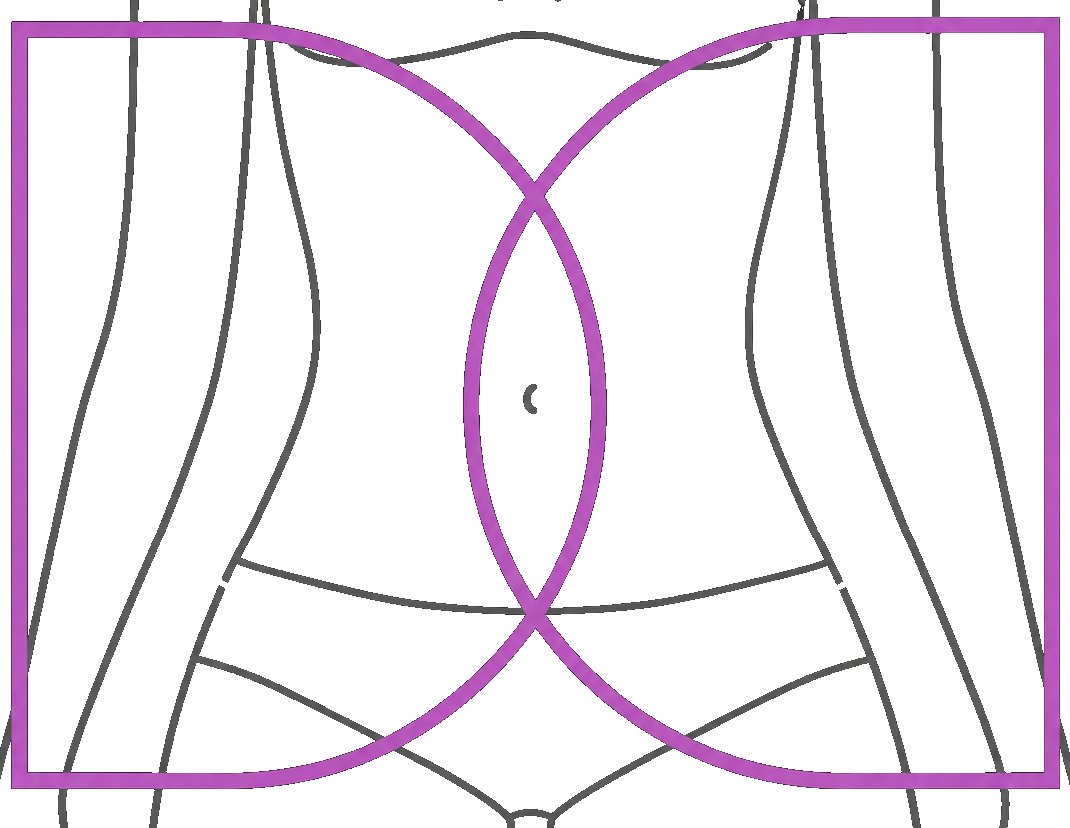
The two rectus abdominis muscles run vertically down the front of the abdomen. They are joined in the midline by a fibrous band called the linea alba. When this band stretches and thins, the muscles move apart, and this separation is what we call diastasis.
Diastasis is not a hernia. There is no defect through which tissue can protrude, and the strangulation risk of a hernia does not apply. The abdominal wall is intact but weakened along its central line.
It is very common after pregnancy, and it also occurs in men, typically with weight gain, ageing, or repeated increases in abdominal pressure. A small degree of separation is normal; the question is when it becomes clinically relevant.
How is the aesthetic experience different from a functional problem?
The distinction I make is between what you see and what you feel. An aesthetic diastasis mainly affects the appearance of the abdomen. A functional diastasis interferes with how your body works.
Both can coexist, and both are legitimate reasons to seek advice. But they lead to different conversations and, sometimes, to different decisions about treatment.
The aesthetic dimension
Here the concern is shape. Patients describe a persistent central bulge, a doming when they sit up, or an abdomen that no longer flattens despite weight loss and exercise.
This experience is real and often distressing, particularly after pregnancy. It is not vanity. However, it is important to be honest: an aesthetic motivation, on its own, places any surgery in the realm of elective, appearance-driven treatment rather than medical necessity.
The functional dimension
A functional diastasis is one that reduces the efficiency of the abdominal wall. The rectus muscles work best when close together; when they are separated, the core loses part of its ability to stabilise the trunk.
This can translate into symptoms that go well beyond appearance, and it is these symptoms that most influence whether I consider an operation.
Which symptoms suggest a functional problem?
Not every wide diastasis causes trouble, and some narrow ones are surprisingly symptomatic. I pay attention to the following:
- Persistent low back pain that has not responded to physiotherapy
- A sense of core weakness or instability when lifting or carrying
- Difficulty performing everyday movements such as rising from lying down
- Postural changes and a feeling of poor trunk support
- Bulging along the midline when abdominal pressure rises
- Occasionally, digestive discomfort or a feeling of pressure
None of these symptoms is specific to diastasis. Back pain in particular has many causes, and I am cautious about attributing it to the abdominal wall without careful assessment. A functional diagnosis is made by connecting symptoms to examination findings, not by measurement alone.
Does the width of the gap decide everything?
No. Patients often focus on centimetres, and while width matters, it is not the whole picture. The quality of the linea alba, the presence of bulging under load, and above all your symptoms carry more weight in the decision.
I do measure the separation, usually clinically and with ultrasound, sometimes with CT when planning surgery. But I treat the person, not the number. Two people with the same measurement may need entirely different approaches.
When is surgery actually indicated?
In my practice, surgery is considered when a functional diastasis produces persistent symptoms that limit daily life and have not improved after a proper course of physiotherapy. This is the core principle: conservative treatment first, surgery for those who genuinely need it.
For a purely aesthetic concern, surgery remains an option, but it is an elective choice. I want patients to understand that they are choosing an operation to change appearance, with all the risks that any surgery carries, and no medical obligation to proceed.
I also think timing matters. After childbirth I advise waiting at least twelve months, allowing the tissues to recover and hormonal changes to settle. Many diastases improve considerably in that period, and some patients avoid surgery altogether.
What conservative treatment should come first
Structured physiotherapy with a therapist experienced in the abdominal wall and pelvic floor is the foundation. The goal is not to close the gap completely, which exercise rarely does, but to improve muscle control, reduce bulging and relieve symptoms.
In a meaningful number of patients this is enough. When it is not, we have at least established that the problem is real and resistant, which strengthens the case for surgery.
What does the surgery involve?
The principle of repair is to bring the two rectus muscles back together in the midline, reconstructing the linea alba, and usually to reinforce the wall. This can be done through open, laparoscopic or fully endoscopic techniques.
I developed a fully endoscopic approach, which I call TESAR, precisely to repair the midline with reinforcement while limiting the size of incisions. No single technique suits everyone; the right choice depends on your anatomy, any associated hernia, skin excess and your own priorities.
When there is significant excess skin, particularly after pregnancy or major weight loss, a plastic surgical component such as abdominoplasty may be combined with the repair. This is where the aesthetic and functional aspects meet in a single operation, and it must be planned honestly with each part clearly explained.
What are the limits and alternatives I always explain?
Surgery is not guaranteed to abolish symptoms, especially back pain, which often has multiple contributors. I am careful not to promise outcomes, and I discuss recurrence, the recovery period and the ordinary risks of any operation.
The main alternative is to continue with conservative management and accept the situation, which is entirely reasonable for many people. For an aesthetic-only concern, choosing not to operate is a perfectly valid decision, and I never push in that direction.
My role is to give you an accurate assessment and honest options, so that any decision, surgical or not, is genuinely yours.
If you are uncertain whether your diastasis is mainly an aesthetic matter or a functional one, an in-person assessment is the most useful next step. I am happy to examine you, review any imaging and discuss whether physiotherapy, observation or surgery best fits your situation, without pressure either way.